


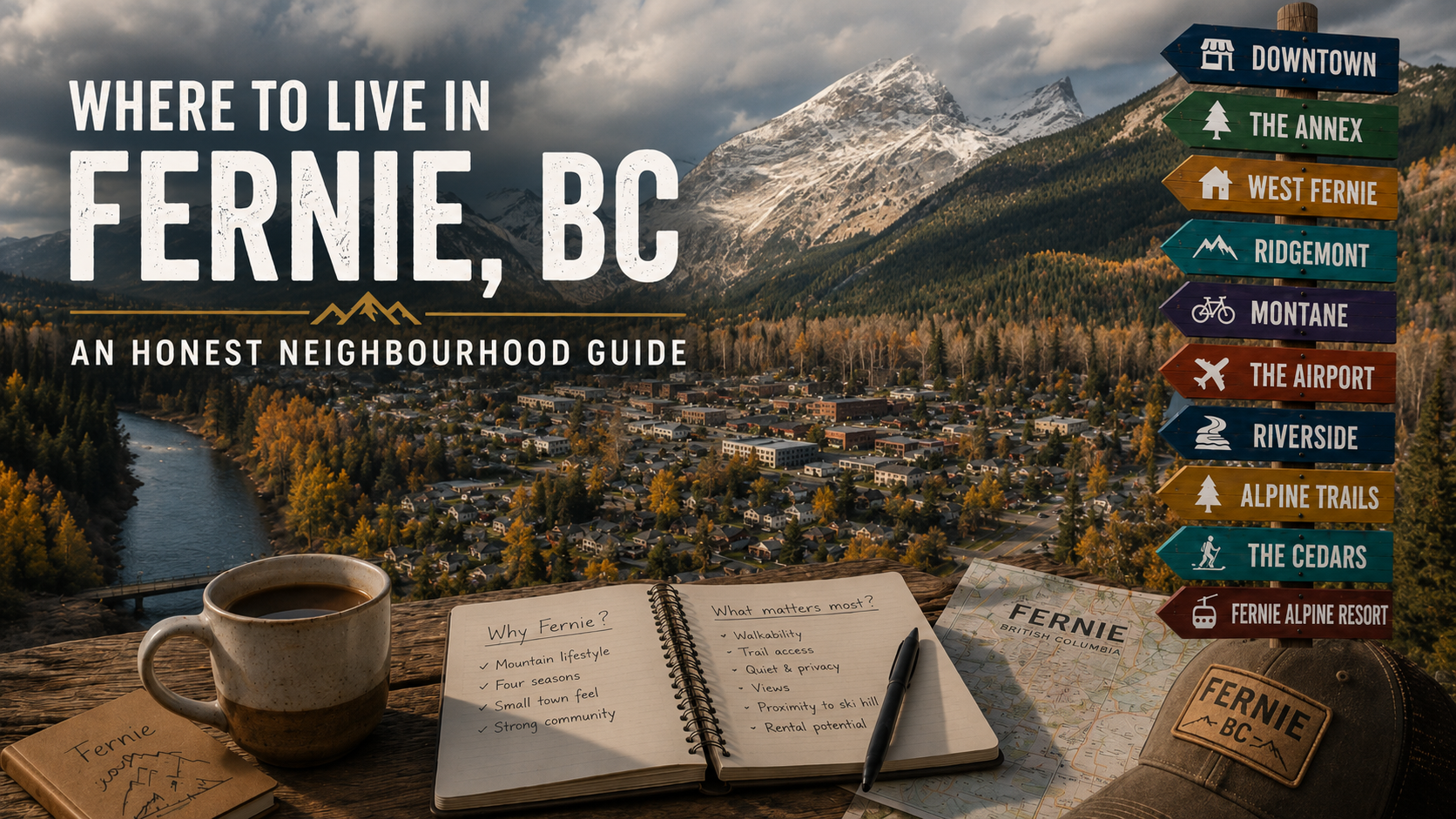
The best neighbourhood in Fernie is...
Well, let's be honest, there is no single best neighbourhood in Fernie. They all have different appeal. Downtown and nearby central areas are strongest for walkability. Ridgemont and Montane make trail access part of daily life. North-end and valley-edge areas can offer more separation from the commercial core. Fernie Alpine Resort suits buyers who want the mountain at the centre of their lifestyle. So the answer depends on how you will use the property and which compromise you are willing to accept.
I have lived in Fernie long enough to know that a five-minute drive can change your experience of a property. Noise, winter sun, snow clearing, driveway grade, trail access, traffic and how often you need the car can feel very different from one neighbourhood to the next.
That is why I encourage buyers to stop asking, “Which Fernie neighbourhood is best?” and start asking, “Which area works best for the way I will actually use this home?”
The City’s planning map uses official names such as Maintown, Annex, West Fernie, Ridgemont, Castle Mountain, Mountview, Riverside, Cedar Valley and Alpine Parkland. In everyday conversation and real estate marketing, you will also hear Downtown, Montane, Coal Creek, The Cedars, Alpine Trails, the Airport and the Ski Hill. Some of these labels overlap. This guide uses the names buyers are most likely to encounter and explains where a precise parcel check still matters.
Fernie neighbourhoods at a glance
Use this comparison as a shortlist, not a verdict. In Fernie, topography and exposure matter. Two homes in the same area can have very different winter sun, traffic, drainage and snow conditions.
| Area | Why buyers consider it | Check carefully |
|---|---|---|
| Downtown / Maintown | Walkability, heritage character, restaurants, shops and events close by. | Railway and event noise, parking, winter routines and older-building condition. |
| The Annex | Central location, established streets and quick access to parks and river pathways. | Parcel-specific flood information, drainage, insurance and older building systems. |
| West Fernie | A varied housing mix, larger yards and outbuildings on some properties, plus river access. | Servicing and permit history, drainage, road access and condition that can change property by property. |
| Ridgemont | Elevated views and direct connection to popular biking and hiking trails. |
Hills in winter, exposure, driveway grade and the uphill walk home from downtown. |
| Montane / Castle Mountain | Newer housing and direct access to a large trail network. | Driving for errands, future construction, mountain-adjacent drainage, wildfire preparation and strata documents where applicable. |
| The Airport | Well-planned residential streets with access to the river & James White Park. | Some car dependence, older homes, views can differ from one to the next. |
| Mountview / Riverside | Practical position between town and the ski-hill corridor, with varied housing types. | Highway proximity, mixed land uses, strata costs and specific rental permissions. |
| Alpine Trails / Parkland Terrace | A tucked-away north-end setting, with more outdoor space on some properties. | Some car dependence, winter access, less sun exposure, wildfire preparation and lot drainage. |
| The Cedars | Newer housing close to the Nordic Centre and routes toward the resort. | Future development, current construction activity and day-to-day driving. |
| Fernie Alpine Resort | Ski hill access, vacation use and a broad mix of condos, townhomes and chalets. | RDEK zoning, strata, management agreements, tax history, owner-use limits and rental compliance. |
Downtown and Maintown: choose proximity with your eyes open
Downtown is the clearest choice for buyers who want to walk to coffee, restaurants, shops, the library and community events. The historic core is a major part of Fernie’s identity, and the housing mix includes heritage homes, infill, apartments and mixed commercial-residential properties.
The trade-offs are real. The railway is close. Events bring crowds, noise and road closures. Parking can be tighter than buyers expect, and an older building may deserve extra attention around foundations, wiring, plumbing, insulation and past renovations.
I live on 2nd Avenue and genuinely enjoy it. I would still tell a buyer to stand outside the property on a busy July weekend, hear the train and picture the winter parking routine before deciding. Walkability is valuable only if the energy of the location suits you.
The Annex: central without being in the commercial core
The Annex sits immediately north of the highway corridor. It offers established streets, mature landscaping, detached homes and quick access to central Fernie, parks and the river.
The City completed the Annex Dike project in 2022 and says it provides 1-in-500-year flood protection from bridge to bridge. That is important infrastructure, but it is not a substitute for checking the exact parcel, drainage, sump systems, flood mapping and an insurer’s requirements.
Housing condition also varies. Some homes have been comprehensively updated, while others still have older roofs, windows, foundations or mechanical systems. The property matters more than the neighbourhood label.
West Fernie: a varied housing and servicing history
West Fernie includes older homes, extensive renovations, infill and properties with larger yards and space for outbuilding space. Some buyers are drawn to that variety and to the area’s proximity to the river and west side of the valley.
This is an area where diligence should be property specific. West Fernie has a distinct servicing and annexation history, and nearby homes can have different renovation, drainage, access and permit stories. Confirm municipal services, title details, outbuilding permits and past work instead of assuming two nearby properties are comparable.
Ridgemont: views, trails and a hill between you and town
Ridgemont rises above the east side of Fernie and connects directly with a well-used biking and hiking network. For a buyer who rides or hikes regularly, leaving home without loading the vehicle can be a meaningful lifestyle advantage.
The elevation can also create views and a sense of separation from downtown activity. The same hill is the obvious compromise. Winter driving, walking and cycling feel different on a slope, and exposure varies by street and lot. Test the route in the conditions you expect to live with.
Montane and Castle Mountain: newer housing shaped around recreation
Montane is one of Fernie’s best-known newer residential areas. Tourism Fernie describes direct access to more than 20 kilometres of trails, and that network genuinely shapes how residents use the neighbourhood.
Buyers who prefer newer systems, contemporary layouts and less immediate renovation work often include this area in their search. Newer does not mean maintenance-free. Review drainage, retaining work, warranties and strata documents where applicable. In developing sections, ask what can still be built nearby rather than judging only today’s view.
The Airport: residential streets near James White Park
The Airport offers an established residential setting on the south side of town, with great access to nearby recreation. It can suit buyers who value the home and street more than immediate commercial walkability.
Look beyond the finishes. This is an older neighbourhood and the quality of finish, upgrades and renovations varies widely from one house to another.
Riverside: practical access toward the ski hill
Riverside sits between West Fernie and the ski-hill. The housing mix includes detached homes, condos, townhomes and visitor-oriented properties. The location can work well for buyers who want practical access to both town and Fernie Alpine Resort.
Highway proximity and mixed land uses should be experienced in person. For condos and visitor accommodation, review the full strata package, insurance, parking, storage and rental history. Never treat “close to the ski hill” or “previously rented” as proof that short-term rentals are permitted today.
Alpine Trails and Parkland Terrace: a quieter north-end setting
Alpine Trails and Parkland Terrace offer a more tucked-away residential feel at the north end of Fernie. Some properties provide more yard, trees or separation from the commercial core, but lot size and privacy vary and should be confirmed from the actual listing and survey information.
This is not the obvious choice for someone who wants to walk to dinner in five minutes. Drive the route in winter. In summer, look at sun exposure, landscaping, wildfire mitigation and how water moves across the lot during heavy rain or spring melt.
The Cedars: between town and mountain
Cedar Valley and The Cedars sit toward Fernie Alpine Resort and close to the Elk Valley Nordic Centre. The Fernie Nordic Society maintains about 10 kilometres of groomed trails at the Nordic Centre, which can be a significant advantage for buyers who want Nordic skiing close to home.
The housing is generally newer than much of central Fernie, but price, floor plan and lot characteristics vary. Review future development, current construction activity and how much driving you will do for groceries, school and downtown services.
Fernie Alpine Resort: when skiing is the centre of the decision
Buying at Fernie Alpine Resort is a different decision from buying in town. The product includes hotel-style condos, conventional condos, townhomes, chalets and ski-access homes. For a household using the property mainly for ski weekends, the walk to a lift may matter more than a large yard or downtown proximity.
The resort area follows the Regional District of East Kootenay land-use framework rather than City of Fernie zoning. Due diligence can include strata fees, building insurance, rental-management agreements, GST history, zoning, owner-use restrictions and short-term-rental rules.
The resort is exempt from the provincial principal-residence requirement, but that exemption does not remove provincial registration, local land-use, strata, tax or management obligations. In some RDEK locations, a temporary use permit may be required when zoning does not permit commercial accommodation. Confirm the exact parcel and unit before assigning any value to rental income.
The best ski-hill property is not automatically the closest unit to a lift. Storage, parking, noise, summer use, building management and the walk back at the end of the day all matter.
Short-term rentals: verify the exact property
Important: Short-term-rental permission is not a neighbourhood-wide feature. It is a property-specific legal and operational question.
Within the City of Fernie, a short-term rental must fit the municipal rules, permitted zoning and business-licence requirements. Provincial registration also applies, and a strata corporation can restrict or prohibit short-term rentals through its bylaws. The City’s current guidance distinguishes eligible primary-residence and condo or hotel situations from secondary homes and accessory suites that are not eligible under the municipal program.
At Fernie Alpine Resort, use the RDEK framework and the provincial resort exemption rules, then check the strata and management documents. A history of bookings is not legal confirmation. Get the written answer for the exact unit before relying on revenue projections.
Hazard, drainage and winter checks belong at the parcel level
Fernie’s mountain setting means watercourse, slope, flood and wildfire considerations can vary over short distances. The City publishes development-permit information and hazard maps, but those resources are only a starting point. Review the title, property disclosure, survey or site plan, permits, insurance availability and professional reports that apply to the exact property.
Winter operations matter too. The City’s alternating winter parking rules run from November 1 to April 15. Check the side of the street, snow storage, driveway grade and the route you will use after a storm. A summer showing can hide the most important part of winter ownership.
How to choose the right Fernie neighbourhood
Before narrowing the search, decide which three things matter most:
- How will you use the property? Full-time living, weekends, seasonal use and rental income create different priorities.
- How much driving feels acceptable? Fernie is compact, but winter changes how a short trip feels.
- What type of maintenance do you want? An older detached home, newer townhome and resort condo require very different ownership effort.
- Which recreation must be accessible from the door? Downhill skiing, Nordic skiing, biking, river access and downtown walkability are not concentrated in one place.
- Which inconvenience can you live with? Train noise, hills, traffic, strata rules, construction or car dependence. Every area asks you to accept something.
My strongest recommendation is to view shortlisted areas at the wrong time, not just the perfect time. Visit downtown on a busy summer Saturday. Drive a hillside street after snowfall. Stand outside the property as the sun goes down. Practice the route you would actually use to work, school, the ski hill or the grocery store.
That usually tells you more than another hour looking at listing photos.
Frequently asked questions
Which Fernie neighbourhood is most walkable?
Downtown and nearby parts of Maintown and the Annex generally provide the easiest access to shops, restaurants and central services on foot. The exact experience depends on the street, the route and winter conditions.
Where should I look for direct trail access?
Ridgemont and Montane connect closely with biking and hiking networks. The Cedars are close to the Elk Valley Nordic Centre, while Fernie Alpine Resort has its own winter and summer trail systems.
Where can I find more yard or outdoor space?
Properties in West Fernie, Alpine Trails, and the Airport will offer more outdoor space than central condos or compact developments. There is no neighbourhood-wide guarantee. Confirm the actual lot dimensions, setbacks, easements and usable area.
Is Fernie Alpine Resort inside the City of Fernie zoning system?
No. The resort area uses the Regional District of East Kootenay land-use framework. That affects zoning and short-term-rental due diligence, so do not apply City of Fernie rules to a resort property.
Where can short-term rentals legally operate?
There is no reliable neighbourhood-wide answer. Within the City, check municipal zoning and licensing, provincial registration and any strata bylaws. At the resort and elsewhere in the RDEK, check the applicable RDEK zoning or temporary-use-permit requirements, provincial registration and strata or management restrictions.
Is it better to buy in town or at the ski hill?
Town generally provides better access to everyday services and a year-round community rhythm. The ski hill offers direct mountain access and more vacation-oriented property. The right choice depends on how often you will use the home, how much driving you accept and whether rental flexibility is part of the plan.
Which area is the best value?
Value changes with property type, condition and current inventory. Compare the total ownership picture, including renovation, strata, insurance, maintenance and driving, rather than treating one neighbourhood as permanently cheaper than another.
What should I check before buying in a Fernie neighbourhood?
At minimum, check title, zoning, permits, property condition, drainage, hazard mapping, insurance, winter access and any strata documents. Add GST, rental, owner-use and management review when buying at the resort or considering short-term rental use.
The bottom line
The best Fernie neighbourhood is the one whose compromises match your priorities. A buyer looking for a walkable permanent home should not use the same shortlist as someone seeking a ski base or a quieter property with room for gear and a yard.
If you are deciding between different areas, I am happy to give you the real version of each one and show you what the listings do not explain. Call or text me at 778-745-0347 or email phil@philgadd.com.
Phil Gadd is the owner of First Tracks Real Estate Group, operating under eXp Realty in Fernie, BC. He is a long-time Fernie resident who helps buyers and sellers across Fernie, Sparwood, Jaffray and Lake Koocanusa.